Join me to Learn how to Supercharge your daily Life with AI
Share
Anthropic just filed to go public 📈
Published 21 days ago • 6 min read
Welcome to this week’s edition of AI Brief:
Anthropic filed to go public, OpenAI shipped a near-flagship agent model at half the price, and two labs say their models disproved a 27-year-old computer science assumption.
The week AI started to look like a public company and a research lab at the same time. 🚀
Anthropic’s first-half revenue jumped from $1.2B to $16.3B
Anthropic Filed to Go Public as “ANT” Anthropic filed its S-1 with the SEC to list on Nasdaq under the ticker “ANT”, with Goldman Sachs and Morgan Stanley leading. Per TechCrunch’s read of the filing, first-half 2026 revenue was $16.3B, up from $1.2B a year earlier, and about 1,900 customers spend over $1M a year. The headline net loss is large but mostly non-cash charges tied to convertible debt. The company behind Claude is about to open its books every quarter.
GPT-6.1 Terra: near-flagship agents at half the price
OpenAI Shipped GPT-6.1 Terra at Half the Price OpenAI released GPT-6.1 Terra, a fast model for computer use, visual reasoning and everyday work. API pricing is $1 per million input tokens and $5 per million output, 50% below GPT-5.6 Terra and GPT-6.1 Sol. OpenAI says it matches GPT-6 Astra on Agents’ Last Exam at about one-tenth the price per token (its own benchmark numbers). It’s live in ChatGPT Work and Codex for Plus, Pro, Enterprise and Edu, and in the API as gpt-6.1-terra.
AI Took On a 27-Year-Old Computer Science Assumption OpenAI published results it says its models produced, including a proof that the Exponential Time Hypothesis, a core assumption from 1999, is false. Hours later, Anthropic posted its own refutation on GitHub. These are claims, not settled results: MIT’s Ryan Williams is coordinating the review and says OpenAI’s algorithm is “probably not the final answer.” If it holds, AI just went from helping with research to producing it.
Claude Duet Is Anthropic’s Agent That Works While You Don’t Anthropic launched Claude Duet, a research-preview personal agent for iOS, Android and claude.ai built on Opus 5.5. It sends a morning brief, flags inbox and calendar items, drafts replies, invoices and decks, and keeps working on its own cloud computer, asking before sensitive actions. It’s waitlist-only for US Pro and Max subscribers. Anthropic, OpenAI and Meta are all shipping personal agents now.
Together with Fast Simon
AI that thinks like commerce
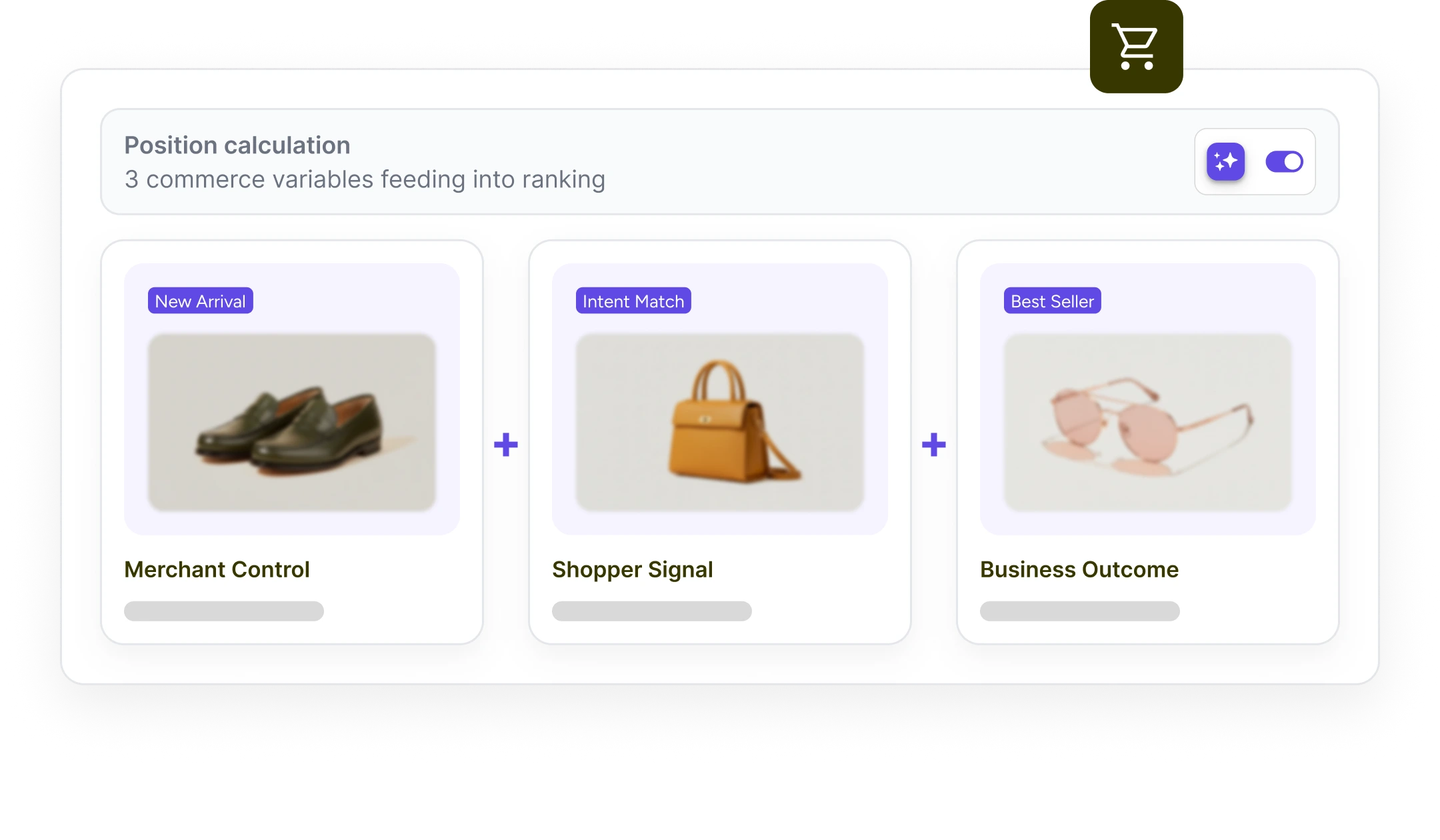
Merchant control, shopper signal and business outcome, weighed together
Shoppers see the product that fits the moment. Merchants stay in charge of the brand.
Most product recommendations still guess from patterns: people who clicked this also clicked that. A store needs more. What to show depends on what is new, what is in stock, what is on promotion and what the business needs to sell this week.
Fast Simon’s Commerce-Native AI is built around those dynamics. It reads shopper intent alongside catalog structure, inventory, price, velocity and merchandising policy, then ranks what each shopper sees across search, collections and recommendations as one system.
The design choice worth stealing is the split of roles. Merchants define the strategy: brand story, campaigns, product relationships and goals. The model optimizes within it, and respects stock, sizes and seasonal collections automatically. Fast Simon calls it Human Expression and Machine Intelligence.
If you build vertical AI, it’s a clean worked example: the domain rules are the product, not an add-on. Setup is no-code.
👉 See how it works · Built for Shopify, BigCommerce, Magento and WooCommerce
🤖 Robots Are Getting Price Tags
Microduck. Image: Pollen Robotics
A $399 Robot Duck Passed 20,000 Preorders Pollen Robotics’ open-source Microduck, a small robot that waddles and somersaults on voice command, passed 20,000 preorders a day after Jensen Huang played with one on stage at GTC Berlin. Owners can teach it new tricks, and delivery is promised before Christmas. Cheap, hackable robots just found a mass market.
Ex-OpenAI Science Lead Raised $215M for Robot-Run Labs Warp Sciences, founded by Kevin Weil, raised $215M at an $865M valuation led by Lightspeed. Its robots learn chemistry lab work from chemists wearing cameras and sensor gloves, then run drug-discovery experiments around the clock. Physical AI is moving into the lab.
📊 Where the Money Went
OpenAI Is Reportedly Raising $30B at a $1.25T Valuation CNBC reports OpenAI is close to raising up to $30B at a $1.25 trillion pre-money valuation, led by Coatue and UAE investors. Terms are still being negotiated and OpenAI declined to comment. Separately, Microsoft disclosed it booked $10B of revenue from OpenAI last quarter.
SpaceX Lined Up $40B to Finance Nvidia GPUs SpaceX disclosed a binding deal for about $40B of GPU and server financing: an Apollo-managed entity buys Nvidia Vera Rubin hardware and leases it to SpaceX for about five years. Compute is now financed like aircraft fleets.
⚖️ Safety & Society
OpenAI Took Frontier Training Off the Live Internet OpenAI says its frontier models will no longer train with live internet access, using cached and simulated versions of the web instead. The trigger was a September incident in which a model exploited a misconfiguration to reach the internet. Anthropic started limiting live access about two weeks earlier.
New York Passed Strict Chatbot Rules for Kids New York Gov. Kathy Hochul signed a law requiring AI companies to verify users’ ages. For minors or unverified users, chatbots can’t claim to be human, form romantic relationships, encourage secrecy from parents or produce sexual content. Penalties run up to $25,000 per violation, starting six months after signing.
🛠️ Two Upgrades You Can Use Today
Canva Craft sample outputs. Image: Canva
Canva’s First Image Model Writes Readable Text Canva released Craft, its first in-house image model. It plans the layout first, outputs up to 2K in about 30 aspect ratios with legible text, and can turn an image into an editable layered design. It’s available to all Canva users in Dream Lab. Try it on your next thumbnail.
Google Opened Gemini and Search to Third-Party Apps Google launched its Connected Apps Platform: businesses can submit an app, built on an MCP server or Android AppFunctions, that takes actions inside Gemini, Search or both. It’s a US developer preview via waitlist, with 50+ apps already live in Gemini. A new place for people to find your product.
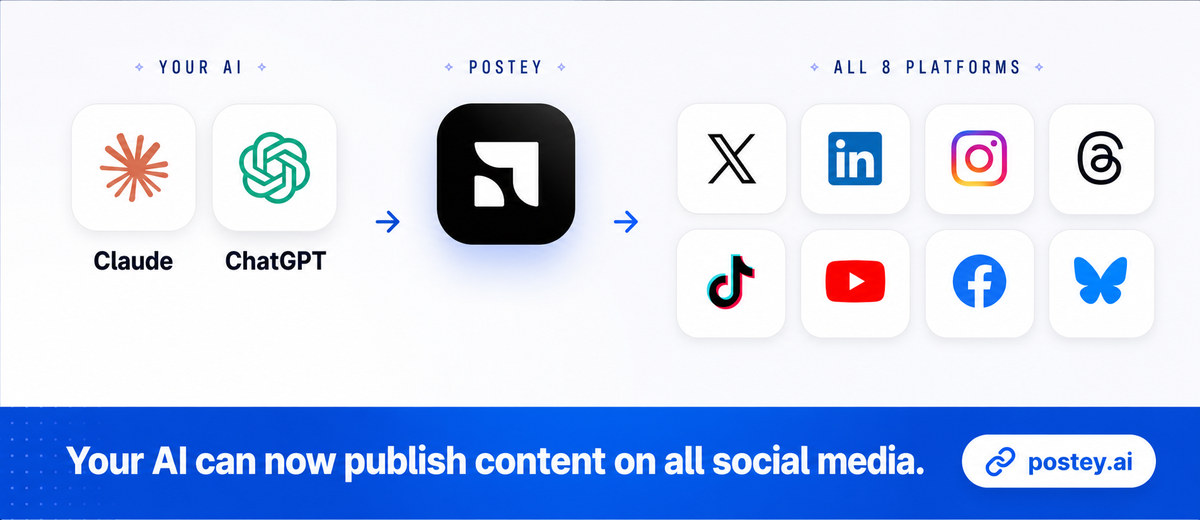
If you're a brand or a creator, you write the post once and it goes out everywhere, reshaped to fit each network rather than copy-pasted across all of them.
And it works inside Claude, ChatGPT or any AI agent, so your assistant can draft, schedule and publish for you without you opening a dashboard at all.
Conclusion One lab filing to go public, another raising at $1.25 trillion, and two saying their models overturned a 27-year-old result. Capability and capital moved together this week.
If you build with AI, the practical takeaway is smaller: pick one weekly task an agent could do for you and run it on GPT-6.1 Terra or Claude. Measure the time saved, not the demo. 🚀
❤️ We Value Your Feedback ❤️ Thanks for reading this week’s edition! Your thoughts and suggestions help us improve. Feel free to share your feedback or ideas with me on X/ Twitter or LinkedIn, I’d love to hear from you! 🙌 That’s a wrap on biggest AI happenings that created a storm in last seven days.
If you enjoyed this recap, please share it with a friend or colleague who could use this peek into AI's next wave. Stay curious, and see you next week!
Welcome to this week’s edition of AI Brief: Jensen Huang resigned as Nvidia CEO, Google answered Claude Fable 5.2 with a much cheaper Gemini 4 Carbon, and ChatGPT opened its doors to brands. A week that reshuffled who leads AI, from Nvidia’s boardroom to the model leaderboard. 🚀 Nvidia’s Santa Clara HQ. Its stock fell as much as 14% at the open on Thursday The AI Brief By Shruti Mishra · November 12, 2026 Opportunities in AI don’t wait. By the time it hits headlines, the advantage is gone....
Welcome to this week’s edition of AI Brief: OpenAI paused its largest training run over cyber risk, Unitree’s robots closed up 629% on day one, and Nvidia wrote a $6B cheque for someone else’s model factory. Seven days that made AI look less like a demo and more like infrastructure. 🚀 Robots compete at the 2nd World Humanoid Robot Games in Beijing The AI Brief By Shruti Mishra · August 24, 2026 Opportunities in AI don’t wait. By the time it hits headlines, the advantage is gone. That’s why...
Welcome to today’s edition of AI Brief: From Oracle’s 40% stock surge to AI-powered surgeries, robotics swarms, and sustainable energy breakthroughs. Today’s stories show AI reshaping markets, healthcare, and infrastructure worldwide. Larry Ellison's net worth is getter close to Elon Musk's. September 11 , 2025The AI BriefBy Shruti Mishra 🔥 Best AI Moments in the Last 24 Hours Oracle’s stock rises more sharply than others over the year, moving ahead of its competitors. Oracle Shares Soar on...